Arabic
  English
  Spanish
  French
  Russian
  German
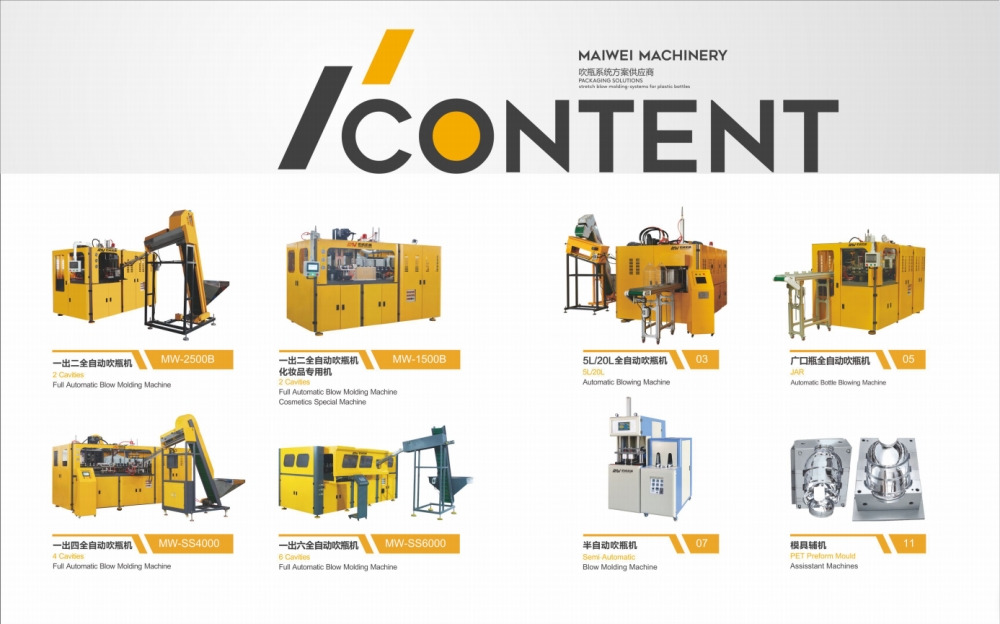
In the realm of plastic manufacturing, blow molding is a widely used process for creating hollow plastic products, particularly bottles. Among the various blow molding techniques, Injection Stretch Blow Molding (ISBM) and Traditional Blow Molding (TBM) stand out for their unique advantages and applications. Maiwei, a leading manufacturer of blow molding machines, offers insights into these two methods, helping manufacturers understand their differences and choose the right process for their needs.
Understanding Blow Molding Processes
Blow molding involves forming plastic into hollow shapes using air pressure. The process typically begins with a plastic preform, which is then heated and inflated into a mold. While both ISBM and TBM are designed to produce plastic bottles and containers, they differ significantly in their methodology and resulting product characteristics.
Traditional Blow Molding (TBM)
Traditional Blow Molding encompasses various techniques, including Extrusion Blow Molding (EBM) and Injection Blow Molding (IBM).
How TBM Works:
- Preform Creation: In EBM, plastic resin is extruded into a tube (parison) that is cut to size. In IBM, the preform is created by injecting molten plastic into a mold.
- Blowing: The parison or preform is heated and then placed in a mold, where air is blown into it to shape it into the desired form.
- Cooling: Once formed, the bottle is cooled within the mold and then ejected.
Advantages of TBM:
- Speed: Traditional blow molding processes can produce bottles quickly, making them suitable for high-volume production.
- Versatility: TBM can create a wide variety of bottle shapes and sizes, making it ideal for different applications, from small containers to large jugs.
- Cost-Effectiveness: For certain applications, traditional methods can be more economical, especially when producing larger quantities.

Injection Stretch Blow Molding (ISBM)
Injection Stretch Blow Molding is a more advanced method that combines injection molding and stretch blowing techniques.
How ISBM Works:
- Injection Molding of Preform: The process begins with the injection molding of a preform, which is shaped with high precision. This preform is often produced using a single-cavity or multi-cavity mold.
- Heating: The preform is heated to a specific temperature that allows it to be stretched without breaking.
- Stretch Blowing: The heated preform is then stretched vertically and inflated with air in a separate mold, allowing it to take on the final bottle shape.
- Cooling: The newly formed bottle is cooled before being ejected from the mold.
Advantages of ISBM:
- Superior Clarity and Finish: ISBM produces bottles with excellent clarity and surface finish, making it an ideal choice for products where aesthetics matter, such as beverage bottles.
- Strength and Lightweight Design: The stretching process aligns the polymer molecules, resulting in stronger bottles that are often lighter than those produced by traditional methods. This characteristic is especially beneficial for carbonated beverage bottles.
- Precision and Consistency: ISBM allows for precise control over the dimensions and wall thickness of bottles, leading to fewer defects and higher quality.
- Design Flexibility: ISBM enables the creation of complex shapes and integrated features, such as handles or unique neck designs, providing more options for product differentiation.
Key Differences Between ISBM and TBM
| Feature | Traditional Blow Molding (TBM) | Injection Stretch Blow Molding (ISBM) |
|---|---|---|
| Preform Creation | Extruded or injected | Injected preform |
| Production Speed | Generally faster for larger runs | Slower due to additional steps |
| Bottle Quality | Good, but less clarity and finish | Superior clarity and surface finish |
| Strength | Variable, depends on process | Higher strength due to molecular alignment |
| Material Waste | More waste possible | Less waste due to precise control |
| Flexibility | Versatile but limited design capabilities | High flexibility for complex designs |
| Initial Investment | Lower initial costs | Higher initial costs due to equipment |
Choosing the Right Method for Your Production Needs
When deciding between ISBM and TBM, manufacturers should consider several factors, including:
- Production Volume: TBM may be more cost-effective for large-scale runs, while ISBM is preferable for medium to high-quality production.
- Product Requirements: If clarity, strength, and design flexibility are essential, ISBM is the superior choice. For standard shapes and less stringent quality demands, TBM may suffice.
- Budget: Initial investment and operating costs will vary, so it’s essential to assess the total cost of ownership.
Conclusion
Both Injection Stretch Blow Molding and Traditional Blow Molding offer unique advantages that cater to different manufacturing needs. Understanding the differences between these methods is crucial for manufacturers aiming to optimize their production processes.
Maiwei, with its expertise in blow molding technology, can provide tailored solutions to meet specific production requirements. By investing in advanced blow molding machines, manufacturers can enhance efficiency, reduce costs, and produce high-quality plastic bottles that meet market demands.
For more information on how Maiwei’s blow molding machines can elevate your production capabilities, contact us today!