Arabic
  English
  Spanish
  French
  Russian
  German
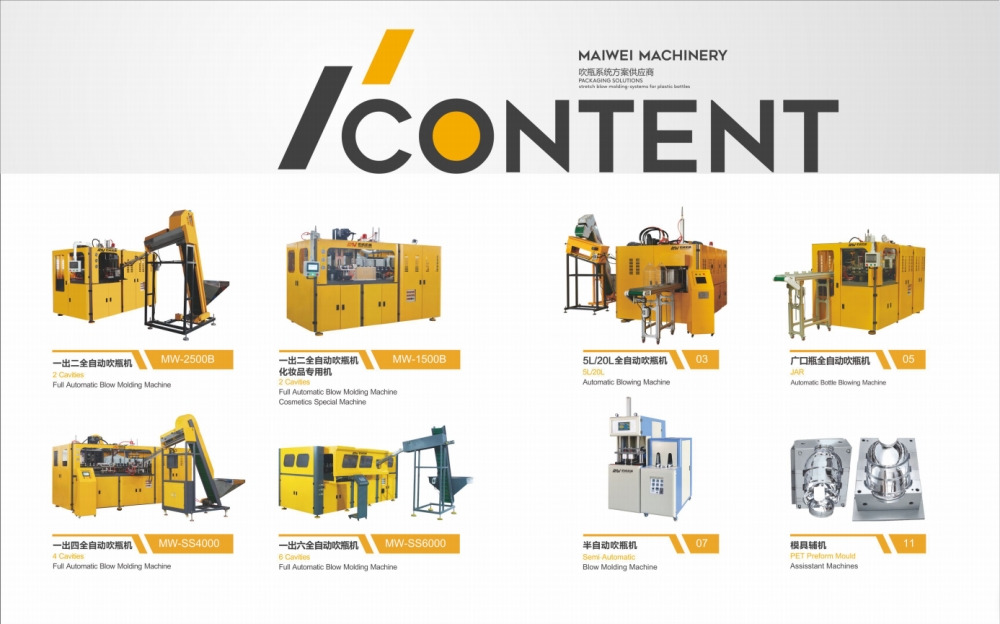
Taizhou Huangyan Maiwei Machinery Co., Ltd. is a leading manufacturer of bottle blow moulding machines, Our company specializes in the design, production, and sale of full automatic bottle blowing machines, semi-automatic bottle blowers, and PET preform moulds. We have a team of highly skilled engineers and technicians who are dedicated to continually developing innovative and advanced technologies for our machines. Our state-of-the-art manufacturing facilities and strict quality control processes ensure that our products meet international standards and customer specifications.
Our bottle blow moulding machines are manufactured with the latest technology and equipment, making them highly efficient and cost-effective. They are designed to produce a wide range of bottle shapes and sizes, including PET bottles, HDPE bottles, and plastic containers. We offer both standard and customized solutions to meet our clients’ specific needs.
Our machines come with advanced features such as servo motor control, high-speed precision index drive, and high-efficiency heating systems, all of which allow for faster production and higher quality output. With the use of advanced PLC systems, our bottle blowing machines are easy to operate and require minimal manual intervention.
Our bottle blowing machines are equipped with cutting-edge technology, ensuring high accuracy and reliability. Some of the technical specifications include:
- Production Capacity: 2400-8000 bottles per hour
- Applicable Bottle Type: PET bottles, HDPE bottles, plastic containers
- Bottle Volume: 100ml – 2L
- Power Supply: 220V/380V/415V, 50Hz/60Hz
- Heating System: Infrared tube heating
- PLC System: Mitsubishi, Omron or Siemens
- Servo Motor: Delta, Panasonic or Yaskawa
- Pneumatic component: SMC or Festo
- Machine Material: Stainless steel 304
- Machine Dimension: 3000mm x 1700mm x 2000mm
- Weight: 2500kg
Our bottle blowing machines have been widely used in the food and beverage, pharmaceutical, and chemical industries. They have been well-received by our customers from all over the world for their high performance, durability, and cost-effectiveness.

Versatile, efficient, and precise – these are some of the qualities that define our bottle blow moulding machine. This machine uses a high-pressure air technique to shape and mold molten plastic into durable and attractive bottles and containers. Our machine is suitable for various applications, including food and beverage, cosmetics, personal care, and household products. With its intelligent control system, it ensures consistency and repeatability in production. Invest in our bottle blow moulding machine and see the impact it has on your production efficiency and profitability.
Plastic bottles and containers are everywhere, from household items to industrial products. And behind these high-quality and durable packaging is a bottle blow moulding machine. Our bottle blow moulding machine is equipped with the latest technology and has been optimized for easy operation and maintenance. With its high-speed production and precision control, our machine can quickly fulfill large order quantities without compromising quality. Whether you’re producing for domestic or international markets, our bottle blow moulding machine is a reliable and cost-effective choice.

The Bottle Blow Moulding Machine is an advanced and innovative solution for creating high-quality plastic bottles at an efficient pace. This machine is designed with precision engineering and utilizes the latest technology to produce bottles with smooth finishes and precise dimensions. It is suitable for creating a wide range of bottle shapes and sizes, making it a versatile choice for various industries. With its user-friendly interface and low maintenance requirements, the Bottle Blow Moulding Machine is an ideal choice for companies looking to increase their production output while maintaining quality standards. Trust in this reliable and efficient machine for all your bottle manufacturing needs.
1.What is the average lifespan of molds used in a bottle blow moulding machine?
2.What is the cost of a bottle blow moulding machine?
3.What is the process for installing a bottle blow moulding machine?
4.How does a bottle blow moulding machine handle different types of plastic materials?
5.Are there any environmental concerns with using a bottle blow moulding machine?
6.What is the production capacity of a bottle blow moulding machine?
1.What is the average lifespan of molds used in a bottle blow moulding machine?
The average lifespan of molds used in a bottle blow moulding machine can vary depending on several factors such as the type of material being used, the frequency of use, and the maintenance and care of the molds. Generally, molds can last anywhere from 1,000 to 100,000 cycles before needing to be replaced. With proper care and maintenance, some molds can last even longer.
2.What is the cost of a bottle blow moulding machine?
The cost of a bottle blow moulding machine can vary greatly depending on the size, features, and brand of the machine. On average, a basic machine can cost anywhere from $10,000 to $50,000, while more advanced machines with higher production capacities can cost upwards of $100,000. Additionally, the cost may also include installation, training, and maintenance fees. It is best to consult with a manufacturer or supplier for an accurate quote based on your specific needs.
3.What is the process for installing a bottle blow moulding machine?
1. Prepare the work area: Before installing the bottle blow moulding machine, make sure the work area is clean, well-ventilated, and has enough space for the machine and its components.
- Unpack the machine: Carefully unpack the machine and its components, making sure to remove all packaging materials.
- Assemble the machine: Follow the manufacturer’s instructions to assemble the machine. This may involve attaching the base, mounting the extruder, and connecting the electrical and pneumatic components.
- Connect utilities: The bottle blow moulding machine will require electricity, compressed air, and water to operate. Make sure these utilities are connected and functioning properly before proceeding.
- Install the moulds: The moulds are an essential part of the bottle blow moulding process. Install the moulds according to the manufacturer’s instructions, making sure they are securely in place.
- Adjust settings: The machine will have various settings that need to be adjusted for different bottle sizes and shapes. Follow the manufacturer’s instructions to set the appropriate parameters for your desired bottle.
- Test run: Before starting production, it is important to do a test run to ensure the machine is functioning properly and the bottles are being produced to the desired specifications.
- Train operators: If you have hired new operators to run the machine, make sure they are properly trained on how to operate and maintain the machine.
- Start production: Once everything is set up and tested, you can start production. Monitor the machine closely during the first few runs to ensure everything is running smoothly.
- Regular maintenance: To keep the machine running efficiently, it is important to perform regular maintenance and cleaning. Follow the manufacturer’s instructions for maintenance schedules and procedures.
4.How does a bottle blow moulding machine handle different types of plastic materials?
A bottle blow moulding machine is designed to handle different types of plastic materials by adjusting its settings and parameters according to the specific characteristics of the material being used. This includes the temperature, pressure, and speed of the machine, as well as the type and design of the mould used.
The following are the general steps involved in how a bottle blow moulding machine handles different types of plastic materials:
- Material Selection: The first step is to select the appropriate plastic material for the desired bottle. Different types of plastic materials have different properties, such as melting point, viscosity, and shrinkage rate, which can affect the final product.
- Material Preparation: The selected plastic material is then prepared for the blow moulding process. This involves melting the plastic pellets or granules in a hopper and then transferring them to the extruder.
- Extrusion: The extruder is a heated barrel with a rotating screw that melts and mixes the plastic material. The molten plastic is then forced through a die, which shapes it into a hollow tube called a parison.
- Moulding: The parison is then clamped between two halves of a mould, which is designed to create the desired shape of the bottle. The mould is cooled to solidify the plastic and then opened to release the finished bottle.
- Cooling and Trimming: The newly formed bottle is cooled to ensure its shape is maintained. Once cooled, excess plastic is trimmed off from the top and bottom of the bottle.
- Quality Control: The final step is to inspect the bottle for any defects or imperfections. This is done using various quality control measures, such as visual inspection, leak testing, and weight measurement.
The machine’s settings and parameters, such as the temperature, pressure, and speed, are adjusted according to the specific characteristics of the plastic material being used. For example, some materials may require higher temperatures to melt properly, while others may require lower temperatures to prevent overheating and degradation.
The type and design of the mould also play a crucial role in handling different types of plastic materials. The mould must be designed to accommodate the specific properties of the plastic material, such as its shrinkage rate and flow characteristics, to ensure the final product meets the desired specifications.
In summary, a bottle blow moulding machine handles different types of plastic materials by adjusting its settings and parameters and using moulds designed to accommodate the specific properties of the material being used. This allows for the production of high
5.Are there any environmental concerns with using a bottle blow moulding machine?
Yes, there are several environmental concerns associated with using a bottle blow moulding machine:
- Energy consumption: Bottle blow moulding machines require a significant amount of energy to operate, which contributes to carbon emissions and contributes to climate change.
- Plastic waste: The bottles produced by blow moulding machines are typically made of plastic, which is a non-biodegradable material. This leads to a buildup of plastic waste in landfills and oceans, causing harm to the environment and wildlife.
- Chemical emissions: The process of blow moulding involves heating plastic resins, which can release harmful chemicals and fumes into the environment.
- Water usage: Bottle blow moulding machines require a large amount of water for cooling and cleaning purposes, which can put a strain on local water resources.
- Disposal of used machines: When a bottle blow moulding machine reaches the end of its lifespan, it can be difficult to dispose of properly, as it contains various components and materials that may be harmful to the environment if not disposed of correctly.
To mitigate these environmental concerns, some manufacturers have started using recycled plastic in their blow moulding machines and implementing energy-efficient technologies. Additionally, proper waste management and recycling of plastic bottles can help reduce the environmental impact of using bottle blow moulding machines.
6.What is the production capacity of a bottle blow moulding machine?
The production capacity of a bottle blow moulding machine can vary depending on the size and type of machine, as well as the type and size of bottles being produced. Generally, a single machine can produce anywhere from 500 to 10,000 bottles per hour. Some high-speed machines can even produce up to 20,000 bottles per hour. The production capacity can also be affected by factors such as the quality of the raw materials, the skill of the operator, and the maintenance of the machine.